
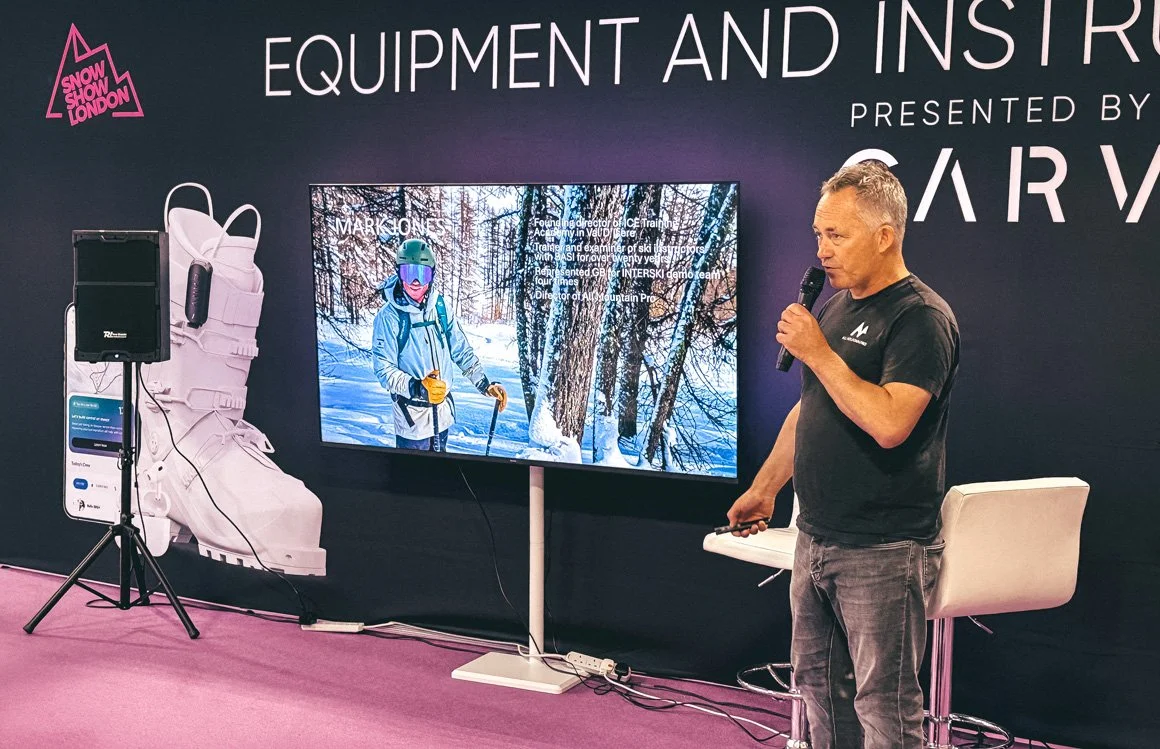
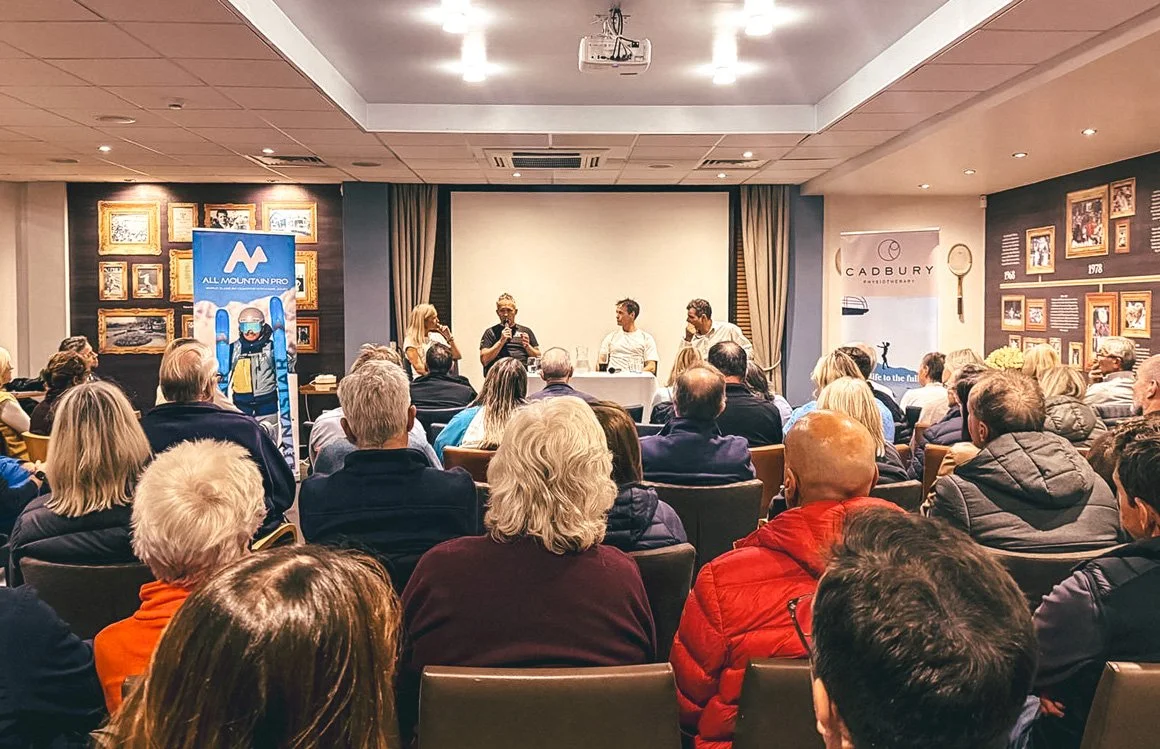
It has been a busy autumn! Myself and Henry Schniewind have been delivering training sessions and presentations throughout the UK, meeting keen skiers looking to develop their off-piste knowledge and skills ahead of the coming winter season.
One of our main motivations behind this tour is to offer more opportunities for off-piste skiers to access quality training before winter begins. For us, this is about two equally important areas: understanding and managing risk, and developing the technical ability to ski safely and confidently in an ever-changing mountain environment.
Off-piste skiing is incredibly rewarding, but it also brings different challenges and responsibilities. Being a good piste skier doesn't automatically make you a good off-piste skier. Understanding the environment is just as important as being able to make good turns.
It's about giving skiers the knowledge to recognise potential hazards, understand uncertainty and make more informed choices.
Understanding Risk: Why Hiring a Guide Isn't Enough.
When chatting to clients, one response we hear quite regularly is: "We know it's risky, so we always hire a guide."
Of course, hiring a qualified and experienced mountain guide is an excellent decision. However, there is an important distinction between hiring a guide and understanding the risks yourself.
One potential problem is that all responsibility can effectively be handed over to the guide. The group becomes entirely reliant on one person's knowledge and decision-making. Unfortunately, avalanche accidents can and do occur in guided groups. Having a guide does reduce the risks, but it does not eradicate them.
A much much safer dynamic exists when clients arrive with a good foundation of avalanche awareness and mountain safety knowledge. Rather than simply following the guide, they can become active participants in the decision-making process.
Are we comfortable with the decisions being made? Where are we going and why? What are the potential hazards?
Within our UK training sessions, Henry has been focusing on risk management and decision-making. What are the main factors influencing terrain choice? How do we interpret the avalanche forecast? How effective is assessing the snowpack? And why isn't the feedback we receive from the environment around us always as reliable as we might think?
The aim isn't to turn everyone into an avalanche expert overnight. It's about giving skiers the knowledge to recognise potential hazards, understand uncertainty and make more informed choices. We want people to engage with their guide, ask sensible questions and understand why particular terrain is being selected.
Are You Actually in Control of Your Skiing?
The other major focus of our training has been technical skiing ability.
We can spend a great deal of time discussing avalanche forecasts and terrain selection, but what happens when we actually reach the slope?
Can you dictate your speed and line in all conditions and terrain? Can you make the turns you want, when you want, whether you're skiing deep powder, heavy snow, crust or chopped-up terrain?
Being able to adapt your skiing to changing conditions is fundamental to staying in control.
My delivery throughout the UK sessions has focused on control of speed and line. What methods can we use to regulate our speed? Is our chosen line effective? Are we clear about the inputs our skis need? And can we keep a simple technical focus when the snow and terrain are constantly changing?
Conditions can change dramatically within a single run. You might start in beautiful, light powder, only to encounter heavier snow, wind-affected sections or a completely different surface further down.
We want to have a simple, clear framework that works across a wide range of conditions. Understanding how to control the skis, manage pressure and regulate turn shape gives us a much better foundation from which to adapt.
Good off-piste skiing is about combining technical competence with sound judgement.
Speed and Line: The Foundations of Confidence
For me, two of the most important elements of good off-piste skiing are control of speed and line.
Speed control isn't simply about skiing slowly. It's about making the right decisions on what methods to use for speed control, it’s really more about tactics than than movements. Great skiers always ski at a constant speed, achieving this in all conditions requires the ability to make the right decisions while on the move.
For speed control the two methods available to use are arc length and skidding, or a combination of both. These methods are used throughout skiing, from skiers making their first linked turns, through to Olympic athletes.
Line choice is equally important. If a guide gives us a safe line to ski, can we accurately achieve that? Can we make smooth, round turns at a constant speed? Are we able to adjust the corridor width of the run we are making?
Good off-piste skiing is about combining technical competence with sound judgement. Having the ability to ski a steep powder slope is one thing; understanding whether, where and how to ski it is quite another.
Get Ready for the Winter!
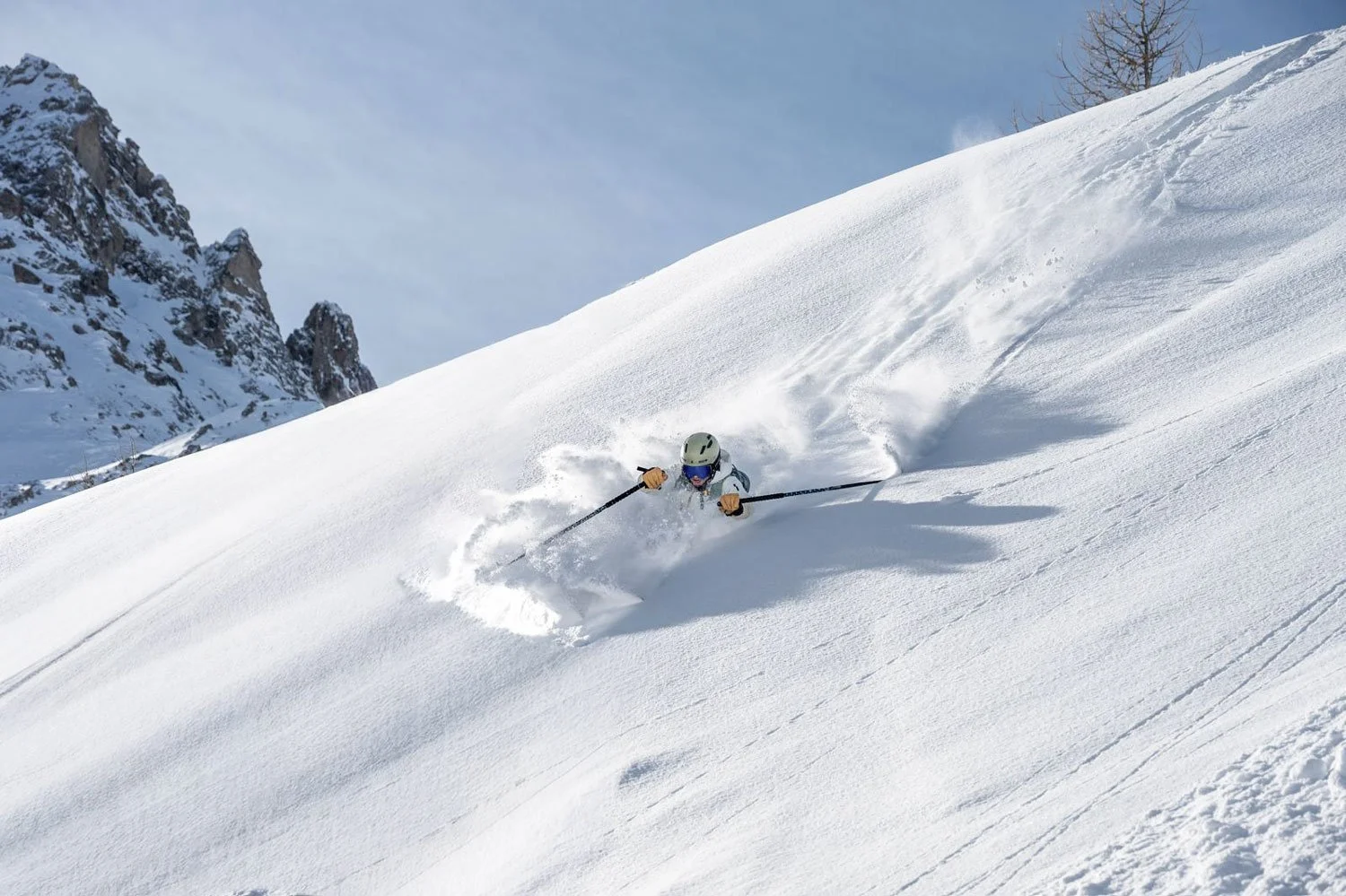
There is a real advantage to developing these skills before heading into the mountains for the season. Autumn training gives us the opportunity to refresh our knowledge, understand how to make big improvements and prepare for the challenges winter might bring.
It also means that when we book time with a mountain guide, we can get much more from the experience, understanding the reasoning behind terrain selection and contributing positively to the group.
Ultimately, our aim at All Mountain Pro is to help skiers become more independent, knowledgeable and capable in the mountains.
Technical ability, risk awareness and good decision-making all go hand in hand. Improving one without considering the others only gets us so far.
So, if you're planning to spend more time off piste this winter, why not invest a little time in your preparation now?
Whether it's refreshing your avalanche knowledge or improving your ability to control speed and line in challenging conditions, a little preparation can make a huge difference.
Hands-on training beforehand will give you that edge when the powder arrives!
We look forward to seeing you out in the mountains this winter.
